
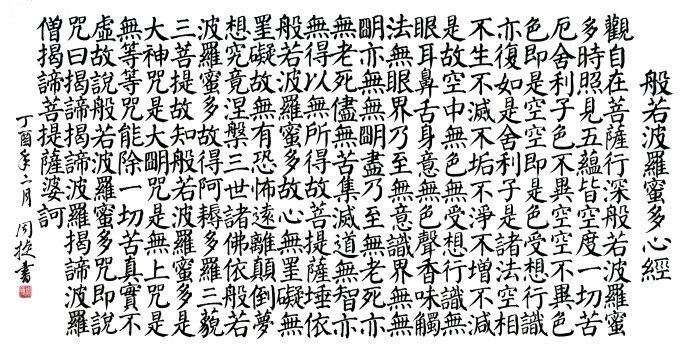
觀自在菩薩,行深般若波羅密多時,照見五蘊皆空,渡一切苦厄。
覺知和平等心的內觀禪修可使人超脫並到達彼岸。並當在般若智慧深入到某一個階段時,可以達到色、受、想、行、識皆停止運作的狀態,並可以超脫於所有痛苦和煩惱。
Meditation on mindfulness and equanimity can lead people to transcendence and reach the other shore. When prajna wisdom reaches a certain stage, it can achieve a state where the functions of form, sensation, perception, activity, and subconsciousness all cease, and one can transcend all suffering and afflictions.
色蘊: 眼、耳、鼻、舌、身的訊息供應
Form (Pāli रूप (rūpa)): Sensory information from the eyes, ears, nose, tongue, and body.
受蘊: 個人內在感受
Sensation (Pāli वेदना (vedanā)): Personal internal sensations.
想蘊: 想像,慨念
perception (Pāli सञ्ञा (saññā)): Imagination and concepts.
行蘊: 意識引起的外在行為
activity (Pāli सङ्खार (saṅkhāra)): Subjective judgment of external objects or internal imagination.
識蘊: 潛意識對我們的影響,例如本能、過去的經歷以及因生活經驗形成的性格等等
subconsciousness (Pāli विञ्ञाण (viññāṇa)): The influence of the subconscious on us, such as instincts, past experiences, and the formation of our personality based on life experiences.
般若波羅密: 般若智慧。般若之道令我們覺悟成佛。不應自覺得到智慧就得到智慧。明白事物的空性,能觀照世界事物的本相。一種特殊精神狀態。
Prajna-paramita: The Perfection of Wisdom. The path of prajna leads us to enlightenment, but we should not think that we have gained wisdom just because we think we have. We understand the emptiness of things and can observe the true nature of the world. It is a special state of mind.
觀自在: 修行人在禪觀之中,覺知心中各種感受和念頭的變化無常,不要批判及分析它,要努心保持平常心,不要受到它影響。就像第三者一樣靜靜地觀察它。觀察念頭的生起、變化、滅去。不要給念頭帶進去,甚至消除在修行過程中對修行產生的快樂的貪愛,不要產生執著 。
Vipassana: In the practice of meditation, practitioners are aware of the impermanence of various feelings and thoughts in the mind, without criticizing or analyzing them. They strive to maintain a neutral mind and not be affected by them, observing them as a third person would. They observe the arising, changing, and passing away of thoughts, without being attached to them or even eliminating the craving for joy that arises during the practice. They should not develop attachments.
舍利子!色不異空,空不異色,色即是空,空即是色,受想行識亦復如是。
所有意識接收到的訊息都是空相,是為五蘊皆空。
All the information received by consciousness is illusory and empty in nature, which means that the five aggregates are also empty.
舍利子: 被引導者。佛陀弟子,舍利佛。
Sariputra: One who is guided. A disciple of the Buddha, Sariputta.
舍利子!是諸法空相,不生不滅,不垢不淨,不增不減。是故空中無色,無受想行識,無眼耳鼻舌身意,無色聲香味觸法。
看透五蘊和所有因緣和合的現象都是幻相。因為所有幻相的慨念在我們的心中。而且所有幻相的二元狀態並沒有絕對性,都是在持續在變化之間,在緣起緣滅之間。所以一切都是幻有的,都是身體帶給本我的種種外在刺激。
To see through the illusory nature of the five aggregates and all phenomena arising from causes and conditions, because all the concepts of these illusions are in our minds. Moreover, the binary nature of all illusions is not absolute, but constantly changing, arising and ceasing in dependence on conditions. Therefore, everything is illusory, and everything is the various external stimuli that the body brings to the self.
法 (Dharma),音譯達摩,是指該事物所包含的一切屬性和特質。如冰之法包含冷與硬,火之法包含光與熱,佛法所謂的法為人的心之法,比如所有的感受、情緒、慾望、貪愛、嗔恨等等。心經所指的「諸法空相」是指人心中生起的一切都是空的,虛幻不實的。很多人會受到這些人心自帶的屬性影響,而認為它們是真實的。原始佛法認為我們必須看透這些法的虛幻,從而不再認可它們,最後獲得解脫。
The term “Dharma” (Sanskrit) or “Dhamma” (Pali) refers to all the attributes and qualities contained within a thing. For example, the Dharma of ice includes coldness and hardness, the Dharma of fire includes light and heat, and in Buddhism, Dharma refers to the nature of the human mind, such as all feelings, emotions, desires, attachments, hatred, etc. The “emptiness of all Dharma” referred to in the Heart Sutra means that everything that arises in the human mind is empty and illusory. Many people are influenced by the inherent nature of their minds and believe that these things are real. Primitive Buddhism believes that we must see through the illusory nature of these things and no longer recognize them in order to attain liberation.
無眼界,乃至無意識界。無無明,亦無無明盡。
直到沒有眼晴所能看到界限,直到意識消失,完全失去對外在世界的感知。直到潛意識完全寂滅,去除無明貪愛等潛意識對我們的影響,不執著不困惑。直到沒有已去除這些無明念頭的想法及過程。
Until there is no limit to what the eyes can see, consciousness disappears and the perception of the external world is completely lost. Until the subconscious is completely extinguished, removing the influence of ignorance and attachment, and being free from attachment and confusion. Until there is no thought or process left that has removed these ignorant thoughts.
無明: 顯意識對潛意識控制力變弱,或被潛意識反過來控制,例如貪嗔痴等。 顯意識不產生任何訊息,但卻可以感受到各種各樣外來的信息,並受到這些訊息的影響。這些訊息非常龐大,當這些訊息進入到顯意識當中時,你會認為這些訊息就是你自己,繼而認可這些訊息對自己的影響,造成各式各樣虛幻不實的幻象。
Ignorance: The weakening of the control of the conscious mind over the subconscious, or the reversal of control by the subconscious, such as greed, anger, and delusion. The conscious mind does not generate any messages, but it can sense various external information and be influenced by them. When these messages enter the conscious mind, you may think that these messages are yourself, and then recognize the influence of these messages on yourself, causing various illusory illusions.
貪愛: 對世間一切事物產生擁有以及渴望在內的一切念頭,想法和感受。修行中除了避免一切負面情緒,更不應陷入對境界的追求以及快樂之中,造成貪愛。《大般涅槃經》云「 因愛生憂,因愛生怖,若離於愛,何憂何怖 」 指的是脫離貪愛的影響就再也沒有擔憂和恐怖。
Attachment: The thoughts, ideas, and feelings of possessing and craving for all things in the world. In practice, in addition to avoiding all negative emotions, one should not indulge in the pursuit of worldly pleasures, which can cause attachment. The “Mahaparinirvana Sutra” says, “Because of love, there is a worry, because of love, there is fear. If you are free from love, what do you have to worry or fear?” It means that if you are free from the influence of attachment, you will no longer have worries and fears.
乃至無老死,亦無老死盡。 無苦集滅道。無智亦無得。以無所得故。菩提薩埵。
直至沒有生老病死的念頭,亦沒有已去除生老病死的想法及過程。沒有痛苦、煩惱的念頭。亦沒有已消除這些痛苦以及煩惱的想法及過程。當中亦沒有智慧的提升以及什麼可以得到的東西。因為本來就沒有什麼可以得到。這就是使有情眾生渡到彼岸的方法。
Until there is no thought of birth, ageing, sickness, and death, and no thought or process of having removed birth, ageing, sickness, and death. There is no thought of pain and affliction, and no thought or process of having eliminated these pains and afflictions. There is also no increase in wisdom or anything to be gained because there was nothing to be gained in the first place. This is the method that enables sentient beings to cross over to the other shore.
菩提: 覺,內觀,覺知。用顯意識主動去感知而不要接受潛意識升起的想法。時時感受自己的狀態,控制好自己的注意力在當下。
Bodhi: enlightenment, introspection, awareness. Actively use the conscious mind to perceive and not accept the thoughts arising from the subconscious. Constantly feel one’s own state and control one’s attention in the present moment.
苦集滅道: 苦是指痛苦,集是指痛苦產生的根源,滅是指清除痛苦的條件,道是指步向涅盤的具體方法。
The Four Noble Truths: suffering refers to pain, the origin refers to the root of pain, cessation refers to the condition for eliminating pain, and the path refers to the specific method towards nirvana.
菩提薩埵: 略稱為菩薩,意譯為覺有情,渡眾生。
Bodhisattva: meaning an enlightened being who is dedicated to helping others attain enlightenment.
依般若波羅密多故,心無罣礙,無罣礙故,無有恐怖,遠離顛倒夢想,究竟涅盤。三世諸佛,依般若波羅密多故,得阿耨多羅三藐三菩提。
通過修行般若智慧的方法,心再沒有任何阻礙。因為心沒有任何阻礙,所以無所畏懼,遠離所有虛幻妄想,解脫一切痛苦。無論在過去、現在、未來得道之人都是通過修行般若智慧去證得無上正等覺。
Through the practice of the method of Prajna wisdom, the mind no longer has any obstacles. Because the mind has no obstacles, there is no fear, and one can be free from all illusions and delusions, and liberated from all suffering. Whether in the past, present, or future, those who attain enlightenment do so through the practice of Prajna wisdom to attain supreme equality and enlightenment.
人由顯意識以及潛意識組成。人在不同的環境的經驗和本能下,潛意識會構成很多不同種類的人性。建構人性的期間會制造大量的垃圾,也就是業。這些業會過度消耗自己的精神和能量。顯意識從潛意識接收不同的訊息去分析和判斷以及回應。潛意識會接受顯意識的控制去完全各種不同的任務。當顯意識不能很好的掌控潛意識時,會造成缺乏自律,注意力難以控制,或沉迷在各種慾望和幻想當中。當超越所有的感觀和意識後的死亡體驗就是涅盤。
A human being consists of both the conscious mind and the subconscious mind. Under different experiences and instincts, the subconscious mind constructs many different types of human nature. During the process of constructing human nature, a large amount of waste is produced, which is known as karma. This karma excessively consumes one’s spirit and energy. The conscious mind receives different messages from the subconscious mind to analyze, judge, and respond to. The subconscious mind accepts the control of the conscious mind to complete various tasks. When the conscious mind cannot control the subconscious mind well, it can lead to a lack of self-discipline, difficulty in controlling attention or being addicted to desires and fantasies. The experience of death beyond all senses and consciousness is Nirvana.
涅盤是在顯意識活躍,清除所有潛意識中的業時,在身體狀態正常情況下的特珠狀態,包括無我,本我完全顯露以及絕對的寂靜。進入涅盤狀態可以再重回人世,如果本身較接近死亡,進入涅盤後將轉為圓寂。原始佛教有四種果位,分別為須陀洹,斯陀含,阿那含,阿羅漢分別對應四次涅盤,也有可能在一次涅盤中達到阿羅漢果。涅盤分為有餘涅盤和無餘涅盤,無餘涅盤也稱為究竟涅盤,是指完全解脫的涅盤。
Nirvana is a state of special existence in which the conscious mind is active, all karma in the subconscious mind is cleared, and the body is in a normal state, including the realization of “no self”, the complete manifestation of the true self, and absolute tranquillity. Entering the state of Nirvana allows one to return to the human world, but if one is close to death, entering Nirvana will lead to Parinirvana, which is the complete passing away. In original Buddhism, there are four stages of enlightenment, namely Stream-enterer, Once-returner, Non-returner, and Arhat, corresponding to the four stages of Nirvana. It is also possible to attain the state of Arhat in one instance of Nirvana. Nirvana is divided into Nirvana with remainder and Nirvana without remainder, also known as Nibbana of the highest purity, which refers to the complete liberation of Nirvana.
顛倒夢想: 人與外界人、事、物有捆綁之心,認為外物是「我」的一部份,並因外物的狀態產生煩惱。心外馳迷失,以幻為真,故起煩惱,是為「顛倒夢想」。
Inverted dreaming: People are bound to the external world of people, things, and objects, thinking that external things are a part of the “self,” and generating afflictions due to the states of external things. The mind is lost in external pursuits, mistaking illusions for reality, thus giving rise to afflictions, known as “inverted dreaming.
無我: 種種人心的屬性都不屬於我
No-self: the various attributes of the human mind do not belong to the self
故知般若波羅密多,是大神咒,是大明咒,是無上咒,是無等等咒。能除一切苦,真實不虛。
所以我們知道般若波羅密多神咒,是最神妙之咒,是最高等咒,沒有其他咒可以相題並論。可以解脫人生一切痛苦,是真實並沒有任何虛假。
Therefore, we know that the Prajna Paramita Mantra is the most miraculous of all mantras, the highest of all mantras, and no other mantra can compare. It can liberate all the sufferings of human life and is true without any falsehood.
咒: 有力量的語言
Mantra: Powerful language.
故說般若波羅密多咒,即說咒曰:羯諦羯諦。波羅羯諦。波羅僧羯諦。菩提薩婆訶。
「去吧,去吧,到彼岸去吧,大定都到彼岸去吧,盡快覺悟得道吧」
Go, go, go to the other shore. All of you, go to the other shore of great tranquillity and awaken to the path as soon as possible.
羯諦: 去吧
Kāṭhina: Go ahead.
波羅: 彼岸
Pāra: The other shore.
僧: 大家
Sangha: Community.
菩提薩婆訶: 盡快覺悟得道
Bodhisattva Mahāsattva: Quickly realize and attain enlightenment.

 鯨落筆記whale fall notes