
佛教有所謂「十二因緣(或稱十二緣起)」,意思是由「無明」所引起基於人心意識屬性所產生的各種情緒慾望和意識問題。十二緣起當中所有「緣起」 都是人心內升起的主觀感受。所謂「緣」, 其實是「潛意識對顯意識的依附」的意思。「無明」是所有人心問題的起點,意思為「顯意識被潛意識依附所引起的愚昧」。在原始佛教觀點裡,我們的顯意識很容易被自己的潛意識依附,如果我們曾經細心觀察過自己思維和情緒起伏,會發現我們常常被「另一個自己(潛意識)」影響。這種「潛意識」從我們孩提時期開始就不斷自動吸收各種各樣的資訊而不被自己所意識,由過去開始累積到現在的潛意識會形成某些性格特質從而影響我們人生所有的選擇。當在未來某刻接收到某種外在訊息後,會刺激到你的潛意識依附於你的顯意識,從而產生情緒感覺、慾望甚至幻象,令你的顯意識信以為真,而被潛意識所控制。
In Buddhism, there is a concept called “The Twelve Nidanas” (also known as “The Twelve Links of Dependent Origination”), which refers to the various emotional desires and consciousness issues arising from the inherent nature of the human mind and consciousness, triggered by “ignorance.” Among the twelve links, all “dependent originations” are subjective feelings arising within the human mind. The so-called “Nidana” actually means “the attachment of the subconscious to the conscious mind.” “Ignorance” is the starting point of all human mind problems, meaning “the foolishness caused by the conscious mind being attached to the subconscious mind.” From the perspective of original Buddhism, our conscious mind can easily be influenced by our subconscious mind; if we have ever carefully observed our own thoughts and emotional fluctuations, we would find that we are often affected by “another self (the subconscious mind).” This “subconscious mind” has been automatically absorbing various kinds of information since our childhood without our awareness. The subconscious mind, accumulated from the past to the present, forms certain personality traits, which in turn affect all the choices in our lives. When receiving some external information at a certain point in the future, it will stimulate your subconscious mind to attach to your conscious mind, resulting in emotional feelings, desires, and even illusions, causing your conscious mind to believe them to be true and to be controlled by the subconscious mind.
顯意識和潛意識的特性以及潛意識對顯意識的依附
The characteristics of the conscious and subconscious mind and the attachment of the subconscious mind to the conscious mind:
顯意識的特質是
The characteristics of the conscious mind are:
- 理性
Rationality - 沒有任何情緒與慾望的特質
Absence of emotional and desire traits - 當下的覺知
Present moment awareness - 可以作出一種旁觀視角、意識抽離和第三身的角度觀察
The ability to adopt an observer’s viewpoint, detached consciousness, and a third-person perspective - 決定一個人可以多大程度控制自己的身體(包括大腦)
Determining the extent to which a person can control their own body (including the brain)
潛意識的特質是:
The characteristics of the subconscious mind are:
- 過去既生活經驗以及生物本能等等訊息組成
Composed of past life experiences and biological instincts, etc. - 情緒、慾望和「念頭」的「工廠」
A “factory” for emotions, desires, and “thoughts” - 一個人基於過去不自覺所接受的各種「垃圾」訊息
A collection of various “garbage” messages that a person has unconsciously accepted in the past - 會因為被動物感官從外界接收訊息而受到刺激,甚至失控
Can be stimulated and even lose control due to passively receiving external information through sensory perception - 腦內的另一把「聲音」
The “other voice” inside the brain
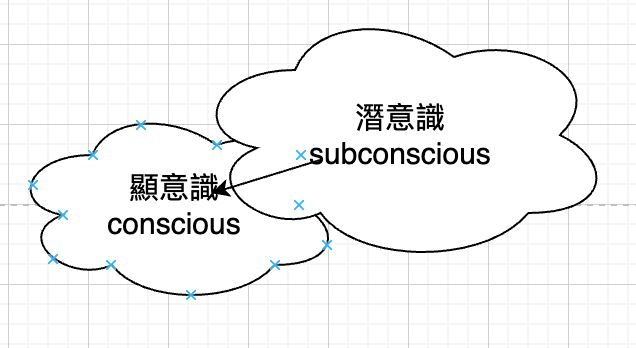
比如你在跑步,你心裡清楚而明白你跑步時,現在左腳踏出還是右腳。你清楚感知到周圍的溫度,感知到自己的呼吸。以一個旁觀者的角度知道當下正在發生的一切。這就是代表你的顯意識在掌握所有控制權。
For example, when you’re running, you’re aware and conscious of which foot you’re stepping with, left or right. You’re aware of the temperature around you and your own breathing. You have an observer’s perspective of everything happening in the present moment, representing your conscious having full control.
但是這時你腦中突然有個念頭說今天早上的工作,想知道等等與當下無關的事物,甚至因為念頭而排洩出情緒慾望。這時候如果你的顯意識主動投入到這些念頭,就等於被潛意識依附與控制,失去對當下事物的覺知,思考再不受自己所控制,也不是在旁觀的角度。
But then a thought pops into your head about work this morning or something else unrelated to the present moment, and it might even trigger an emotional desire. If your conscious mind actively engages with these thoughts, it’s being attached and controlled by the subconscious, losing awareness of the present moment, and your thinking is no longer under your control or from an observer’s perspective.
當潛意識中的某些念頭突然浮現,並且在意識層面「相信」或者反而因為依附既主動深入地投入這些念頭時,就會引發情緒反應。當然,如果對自己的意識缺乏足夠的覺知,就可能不知道為什麼會有這種情緒,單純地認為這種情緒是無緣無故產生的。但這種情緒一定是由某種外在或內在刺激引發的特定念頭所產生的。(情緒可以被視為是來自心智中某特定念頭的排泄物)
When certain thoughts from the subconscious suddenly emerge and are “believed” on a conscious level or actively engaged with due to attachment, it can trigger emotional reactions. Of course, if you lack sufficient awareness of your own consciousness, you may not know why you’re feeling a certain emotion and may just think that it arises out of nowhere. But this emotion must have been generated by a specific thought triggered by some external or internal stimuli. (Emotions can be seen as the excretion of certain specific thoughts in the mind.)
這個問題也影響了你過去與現在之間的聯繫,而且這些聯繫的強度有輕重之分。例如,如果你在童年時期因某些原因對昆蟲感到害怕,你過去與現在的聯繫可能會決定讓你一看到昆蟲就暈眩,或是只有輕微的驚嚇反應。
This issue also affects the connections between your past and present, and the strength of these connections can vary. For example, if you had a childhood fear of insects for some reason, the connections between your past and present might cause you to faint at the sight of insects or just have a mild startle reaction.
其他例子一:對動物的恐懼 Example 1: Fear of Animals
很多對貓、狗、或者其他昆蟲的恐懼都在孩童時代建立起來,由於被某種動物傷害過後,在成年後仍然對該動物產生焦慮、恐懼、憤怒等心理。當成年後在某刻接觸到該動物的訊息後,潛意識會嘗試依附著顯意識,讓當事人相信該動物會馬上進行攻擊行為並趕緊逃離現場,有人甚至可以感覺到當年受傷部位的「痛楚」。這是對某種動物的「感覺」殘留在潛意識當中並在未來的日子不斷影響我們的人生。
Many fears of cats, dogs, or other insects are established in childhood. After being hurt by a certain animal, one can still feel anxious, fearful, angry, and other emotions towards that animal in adulthood. When receiving information about that animal at a certain moment in adulthood, the subconscious will try to attach to the conscious mind, causing the person to believe that the animal will immediately attack and flee the scene. Some people can even feel the “pain” of the injured area from years ago. This is the “feeling” of a certain animal lingering in the subconscious and continuously affecting our lives in the future.
其他例子二:人際關係間的影響 Example 2: Effects on Interpersonal Relationships
我們和父母、戀人、朋友等等的社會關係中都會讓我們產生很多累積在「潛意識」的感覺。例如自小喪父,長大後容易尋找年紀比較大的伴侶。自小依賴母親的話,長大後很有可能找尋與母親外在特徵比較相似的異性。而特別是感受能力較強的人如果在戀愛時經歷過一些嚴重的感覺衝擊,例如發現在戀愛關係當中被背叛,在未來的戀愛關係會引起很多對伴侶的猜疑,會特別沒有安全感,甚至會無時無刻幻想伴侶出軌。潛意識會不斷受到訊息的刺激而依附到事主的顯意識,直到顯意識相信事主的伴侶是不忠的這個「事實」,並在未來的日子不斷影響事主與別人的戀愛關係。
Our social relationships with parents, romantic partners, friends, etc. can all create many feelings that accumulate in the subconscious. For example, if one loses their father at a young age, they may be more likely to seek an older partner in adulthood. If one relies on their mother since childhood, they may be more likely to seek a partner with similar external characteristics to their mother in adulthood. Especially for people with strong sensitivity, if they experience some serious emotional shocks in their romantic relationships, such as discovering betrayal in a romantic relationship, it may cause them to have a lot of suspicion towards their partner in the future, feel particularly insecure, and even constantly imagine their partner cheating. The subconscious will be continuously stimulated by information and attach to the conscious mind until the conscious mind believes that the partner is unfaithful and this “fact” will continuously affect the person’s future romantic relationships.
以上兩個例子就是在說明一種過去的「因」如何影響現在或未來的「果」,這才是對「因果」的正確理解。而「因」與「果」當中的連結力度為「業力」,「無明」就是經「因果業力」令潛意識因某種訊息剌激後對顯意識產生「依附行為」。「業力」強就是代表過去與現在的連結很強,就是潛意識對顯意識的「依附力度」。「業力」的強度主要是看事主對傷害的價值判斷或者是對傷害感受力,例如在保守的國家中的女性被性侵後自殺機會相當高;或者一看到某種動物會立即休克等嚴重情況。
The above two examples illustrate how a past “cause” can affect present or future “effects,” which is the correct understanding of “cause and effect.” The connection between “cause” and “effect” is “karma,” and “ignorance” is the “attachment behavior” of the subconscious to the conscious mind caused by “karmic force” after being stimulated by certain information. The strength of the “karmic force” represents the strength of the connection between the past and the present, which is the “attachment strength” of the subconscious to the conscious mind. The strength of “karmic force” mainly depends on the person’s value judgment of the harm or sensitivity to the harm. For example, in conservative countries, women who are sexually assaulted have a high risk of suicide, or they may go into shock at the sight of a certain animal, resulting in serious situations.
每個人的情緒和念頭產生的量和質都不同,這取決於你的意識層面的控制權有多大,以及潛意識有多強大的影響力 Each person’s quantity and quality of emotions and thoughts are different, depending on how much control their conscious mind has and how strong the influence of their subconscious is.
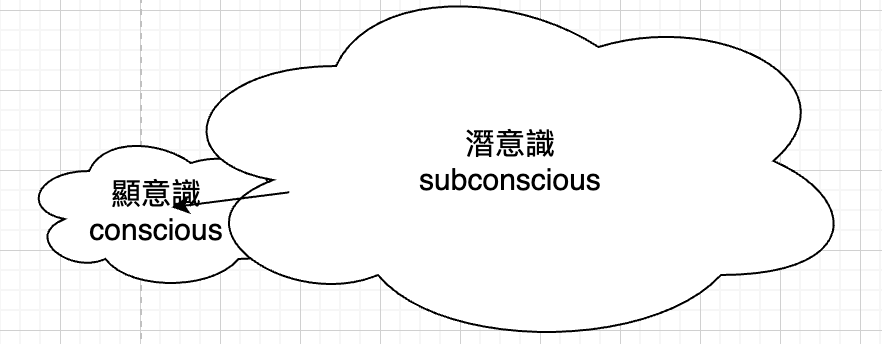
在感受能力特別強的人群,例如小孩、女人、或感受能力相對較高(高敏感人士)的人會較容易被潛意識所影響。這可能是因為理性監護能力較弱,容易被感性所主導,或者在理性監護能力未發展之前就受到了巨大的打擊和壓迫。
Populations with particularly strong sensory capabilities, such as children, women, or highly sensitive individuals, maybe more easily influenced by their subconscious. This may be because their rational guarding ability is weaker, making them more likely to be dominated by emotions, or they have suffered significant blows and oppression before their rational guarding ability has developed.
女性和青少年容易患上情緒病的原因也是這樣,因為她們的基於生理和內分泌的影響,感性太強和太敏感,理性監護能力會受到較大的挑戰,所以念頭產生的情緒會更加劇烈。很容易因為外界的價值觀去強制潛意識接受,最終潛意識會反抗,而顯意識部分或全部失去控制。這樣不斷地讓念頭產生情緒沖擊,最終會導致情緒病的發生。
The reason why women and teenagers are prone to emotional disorders is also due to this. Due to the physiological and endocrine effects, their sensitivity and emotional intensity are too strong, and their rational guarding ability is challenged to a greater extent. Therefore, the emotions generated by their thoughts will be more intense. It’s easy to forcibly impose subconscious acceptance based on external values, causing the subconscious to eventually rebel, and the conscious mind to lose partial or complete control. This constant emotional impact of thoughts can ultimately lead to the occurrence of emotional disorders.
很多人亦缺乏對事物本質的思考,他們的自我價值觀很大部份甚至完全不是由從自己建立的,而是由過度追求外在社會價值標準而建立的。這很容易導致情緒病的發生。如果你將一些世俗的價值觀或意識形態(例如「讀書很重要」、「要拿高分」、「不讀書就沒有前途」等)強加給你的潛意識去承受,潛意識就像一個弱小的嬰兒,你的壓迫會導致它更大的反抗。許多情緒病患者都沒有建立正確的自我價值觀,他們依賴外在的價值標準來定位生命,但他們並沒有意識到人的能力範圍是非常有限的,甚至連自己的身體都無法控制,生死和疾病都不可預測,更何況其他事情呢?因此,將大量的多餘意識形態從腦海中清除出來,審視這些意識形態背後的定義,把無用的意識形態當成垃圾清除掉,是非常重要的。
Many people also lack the ability to think about the essence of things. Their self-values are mostly or even completely established not by themselves, but by external social value standards that they excessively pursue. This can easily lead to the occurrence of emotional disorders. If you impose some secular values or ideologies (such as “studying is important,” “getting high grades is necessary,” “without studying, there is no future,” etc.) on your subconscious to bear, the subconscious is like a weak baby, and your oppression will cause it to rebel even more. Many emotionally disturbed patients have not established correct self-values. They rely on external value standards to locate their lives, but they do not realize that human capabilities are very limited, and they cannot even control their own bodies. Life, death, and disease are unpredictable, let alone other things? Therefore, it is essential to clear out a large number of unnecessary ideologies from your mind, examine the definitions behind these ideologies, and treat useless ideologies as garbage to be discarded.
每個人生產念頭和情緒慾望的量和質都不同,這取決於你的意識層面的控制權有多大,以及潛意識有多強大的影響力。
The quantity and quality of thoughts and emotions produced by each person are different, depending on how much control their conscious has and how strong the influence of their subconscious is.
主要的解決方案 Solutions
意識控制練習,讓顯意識與潛意識的連結分離
Consciousness control practice, to separate the connection between the conscious mind and subconscious
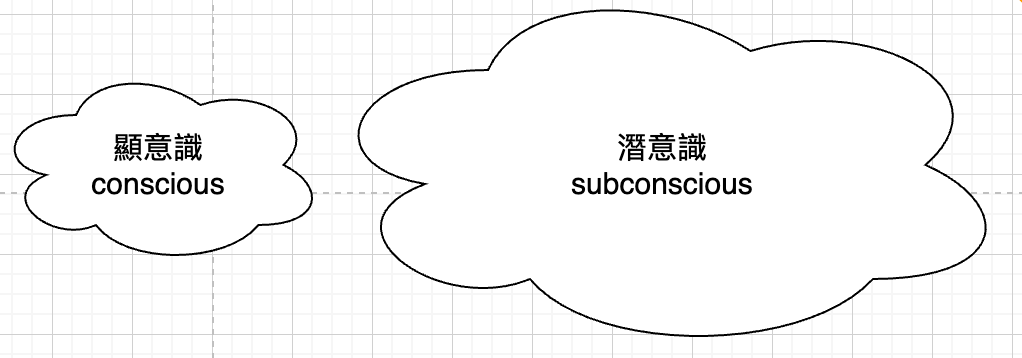
意識練習是一種訓練方法,通過它可以讓顯意識逐漸從潛意識中分離出來,並掌握更多的控制權。主要針對意識的控制練習有兩種-「止」和「觀」。
Consciousness practice is a training method that helps the conscious gradually separate from the subconscious and gain more control. There are two main types of consciousness control practice – “Cessation” and “Observation”.
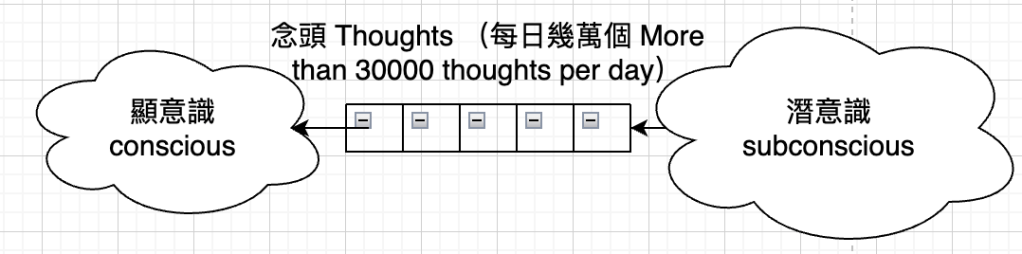
人腦一天會產生大概一萬五千到三萬個念頭,當中很多念頭都是沒有任何價值,反而人腦被這些大量的念頭不斷消耗。而情緒是這些念頭的排洩物,這些情緒會加劇和進一步消耗大腦。我們需要讓這些念頭「穿過」我們,讓它們自然流走。不要投入這些念頭和情緒當中,避免造成大腦的過度消耗。
The human brain produces approximately 15,000 to 30,000 thoughts per day, many of which are of no value and instead consume the brain’s resources. Emotions are the excretion of these thoughts, which intensify and further consume the brain. We need to let these thoughts “pass-through” us and let them flow away naturally. Don’t get caught up in these thoughts and emotions, which can cause excessive brain consumption
「止」的使用方法 How to use “Cessation”?
首先採用第三人稱的角度觀察自己意識狀態,如同有心內一直打開「另一隻眼」來注意自己的情緒,當感知到念頭、情緒慾望等或自己已經投入在這些影響當中,就馬上逃離它們的影響,慢慢地回到你正在做的事情當中。例如,你正在聽一個YouTube談話性節目,但你的注意力並不集中在節目當中,而專注於覺察自己正在做什麼(例如呼吸)。當自己發現被節目內容所吸引,就慢慢地回到你的呼吸當中。通常情況下,你只是知道有人在不斷講話,但不會影響你。
First, observe your own consciousness state from a third-person perspective, as if you have an inner eye that constantly monitors your emotions. When you perceive thoughts, emotions, and desires, or find yourself being affected by them, immediately escape their influence and slowly return to what you are doing. For example, if you are listening to a YouTube talk show, but your attention is not focused on the show, try to focus on what you are doing, such as your breath. When you find yourself being attracted by the content of the show, slowly return to focusing on your breath. Usually, you will only know that someone is talking continuously, but it won’t affect you.
另一個例子是跑步時,你可以專注於每一步的感覺,甚至在腦海中默念「左腳」、「右腳」。當有任何念頭或情緒出現時,你可以慢慢回到專注於腳步的感覺中。專注於節奏性運動(例如呼吸、跑步等等)通常需要你在當下專注,以一念代替萬念,這樣你就不會產生太多的念頭,這也是「止」的意思。僅僅靠提高血清素水平是不夠的,需要讓顯意識與血清素一起工作(例如食用富含色胺酸的食物,然後想辦法讓自己不產生太多的念頭)。還有一種方法是呼吸冥想,專注於每一次呼吸的出入。當感知到有任何念頭或情緒出現或已經投入在其中時,你可以回到專注於呼吸的感覺中。
Another example is when running, you can focus on the feeling of each step, even silently saying “left foot”, or “right foot” in your mind. When any thoughts or emotions arise, you can slowly return to focusing on the feeling of your footsteps. Focusing on rhythmic exercises (such as breathing, running, etc.) usually requires you to be present and focused, replacing multiple thoughts with one thought, so that you don’t generate too many thoughts. This is also the meaning of ‘cessation’. Simply increasing serotonin levels is not enough, you need to let the conscious mind work together with serotonin (for example, by eating foods that are rich in tryptophan, then finding ways to reduce excessive thoughts). Another method is breathing meditation, focusing on the inhalation and exhalation of each breath. When you perceive any thoughts or emotions or find yourself being caught up in them, you can return to focusing on your breath.
「觀」的使用方法 How to use “Observation”?
例子一:觀察自己打噴嚏前的意識訊號 Example 1: Observing one’s own consciousness signals before sneezing
- 在感到自己將要打噴嚏前立即轉換第三身視角觀察自己。
Immediately switch to a third-person perspective to observe oneself when feeling the urge to sneeze. - 放鬆自己的身體
Relax the body. - 抽離地觀察在鼻附近的意識訊號。
Observe the consciousness signals near the nose from a detached perspective. - 認知到這些訊號是身體的雜訊干擾,並不是身體運作的一部份。
Recognize that these signals are just noise interference from the body and not a part of how the body operates. - 最後並不是把噴嚏「忍下來」,而是它會漸漸消失與流逝。
Finally, instead of “holding in” the sneeze, it will gradually dissipate and pass away.
例子二:觀察自己的生理排洩感 Example 2: Observing one’s own physiological elimination sensations
- 在感到自己有便意時立即轉換第三身視角觀察自己。
Immediately switch to a third-person perspective to observe oneself when feeling the urge to eliminate. - 放鬆自己的身體
Relax the body. - 抽離地觀察在大腸或膀胱附近的意識訊號。
Observe the consciousness signals near the colon or bladder from a detached perspective. - 認知到這些訊號是身體的雜訊干擾,並不是身體運作的一部份。
Recognize that these signals are just noise interference from the body and not a part of how the body operates. - 最後並不是把便意「忍下來」,而是它會漸漸消失與流逝。
Finally, instead of “holding in” the urge, it will gradually dissipate and pass away.
例子三:觀察自己在噪音環境的情緒 Example 3: Observing one’s own emotions in a noisy environment
- 在感到自己因為噪音而開始覺得憤怒時立即轉換第三身視角觀察自己。
Immediately switch to a third-person perspective to observe oneself when feeling angry due to noise. - 放鬆自己的身體
Relax the body. - 抽離地觀察在大腦潛意識的意識訊號。
Observe the consciousness signals in the subconscious of the brain from a detached perspective. - 認知到這些訊號是身體的雜訊干擾,並不是身體運作的一部份。
Recognize that these signals are just noise interference from the body and not a part of how the body operates. - 最後並不是把怒意「忍下來」,而是它會漸漸消失與流逝。
Finally, instead of “holding in” the anger, it will gradually dissipate and pass away.
以上三個例子的核心意識行為都是 The core conscious behavior of the three examples above is:
- 感知自己的情緒慾望和意識訊號,並立即轉換第三身視角觀察自己。
Perceive one’s own emotions, desires, and consciousness signals and immediately switch to a third-person perspective to observe oneself. - 放鬆自己的身體
Relax the body. - 抽離地觀察在大腦的意識訊號。
Observe the consciousness signals in the brain from a detached perspective. - 認知到這些訊號是身體的雜訊干擾,並不是身體運作的一部份。
Recognize that these signals are just noise interference from the body and not a part of how the body operates. - 最後並不是把這些情緒慾望和意識訊號「忍下來」,而是它會漸漸消失與流逝。
Finally, instead of “holding in” these emotions, desires, and consciousness signals, they will gradually dissipate and pass away.
經常在日常生活中放鬆地保持對自己意識的覺知與觀察,對意識建立正確的認知(認知到這些訊號是身體的雜訊干擾),很多時候就已經輕易地做到情緒慾望控制和可以極大地提升控制情緒的效率。
Frequently, by relaxing and maintaining awareness and observation of one’s own consciousness in daily life, and establishing correct cognition towards consciousness (recognizing that these signals are just noise interference from the body), many times people can easily achieve emotional and desire control and greatly improve the efficiency of emotion control.
有益腦分泌的飲食和行為 Diet and behavior that benefits brain secretion
腦分泌飲食與行為對於身體和心理的健康具有重要作用。直接食用血清素雖然可以增加血清素水平,但其副作用很多。
Diet and behavior that promote brain secretion play an important role in both physical and psychological health. While direct consumption of serotonin can increase serotonin levels, it also has many side effects.
以下是一些可行的方法 Here are some feasible methods:
- 節律性運動(如跑步、呼吸冥想和跳繩)可以促進大量血清素的分泌,進而幫助身體合成維他命B、色胺酸等重要物質。
Regular exercise (such as running, breathing meditation, and jumping rope) can promote the secretion of a large amount of serotonin, thereby helping the body synthesize important substances such as vitamin B and tryptophan. - 每天定時曬太陽半小時以上,太陽光可以刺激身體分泌大量血清素。
Expose yourself to sunlight for more than half an hour every day at a fixed time, as sunlight can stimulate the body to secrete a large amount of serotonin. - 食用營養補充品,例如每天攝取維他命B群、色胺酸、茶胺酸和牛磺酸等。建議早上空腹食用色胺酸(100mg)和茶胺酸(100-200mg),並在飯後食用維他命B群。不要一次攝取太多的維他命B群,每次最多攝取50mg,食用一個小時後去曬太陽。
Take nutritional supplements, such as daily intake of the vitamin B group, tryptophan, theanine, and taurine. It is recommended to take tryptophan (100mg) and theanine (100-200mg) on an empty stomach in the morning and take vitamin B group after meals. Do not take too much vitamin B group at one time, and take a maximum of 50mg each time. After eating, go out and expose yourself to sunlight for an hour. - 多攝取富含色胺酸的食物,例如牛奶、芝士、納豆、豆漿、堅果、雞肉、雞蛋、鮭魚、鮪魚、瘦肉、牛肉和乳酪等。
Eat more foods rich in tryptophan, such as milk, cheese, natto, soy milk, nuts, chicken, eggs, salmon, tuna, lean meat, beef, and cheese. - 攝取維生素B6可以幫助色胺酸更有效地合成血清素,例如香蕉、全麥麵包、菠菜、深綠色蔬菜、南瓜、燕麥、奇異果、蒜頭、堅果、豆類、乳製品和魚類等食物。
Taking vitamin B6 can help tryptophan synthesize serotonin more effectively, such as in bananas, whole wheat bread, spinach, dark green vegetables, pumpkin, oats, kiwi, garlic, nuts, beans, dairy products, and fish.
以上方法可以幫助你提高血清素水平,進而促進身體和心理的健康。但是,每個人的身體情況不同,建議在咨詢專業人士的建議後再進行相應的行為和飲食調整。
The above methods can help increase serotonin levels, thereby promoting physical and psychological health. However, everyone’s physical condition is different, and it is recommended to consult a professional before making corresponding behavioral and dietary adjustments.
對潛意識內的各種「意識垃圾」反思來建立對事物本質的認知,清除一些不必要的意識形態 Reflecting on various “mental garbage” in the subconscious mind to establish a recognition of the essence of things and eliminate unnecessary ideologies.
平時多閱讀、思考,培養思考意識,探索虛無的事物(概念)背後的本質。可以將腦海中的意識形態提取出來,進行審視。例如,為什麼人要孝順?為什麼人要追求成功?成功的定義是什麼?探索意識形態背後的定義。要勇於思考,不要讓這些意識形態束縛你的人生。
It is important to read and think more often, cultivate a thinking consciousness, and explore the essence behind intangible things (concepts). Extract the ideologies in the mind and examine them. For example, why should people be filial? Why should people pursue success? What is the definition of success? Explore the definitions behind ideologies. Be brave in thinking and do not let these ideologies bind your life.
通過閱讀和思考,可以開拓自己的思維,從而更好地理解和詮釋周圍的世界。在這個過程中,可以更好地認識自己,理解自己在這個世界上的位置和角色。這樣做有利於個人的成長和發展,有助於擺脫意識形態的束縛和限制。
Through reading and thinking, we can broaden our thinking and better understand and interpret the world around us. In this process, we can better understand ourselves, understand our position and role in the world, and promote personal growth and development. This helps us to break free from the constraints and limitations of ideologies.
因此要多閱讀、思考,探索事物背後的本質,不斷開拓自己的思維,從而更好地適應這個複雜多變的世界。
Therefore, it is important to read and think more, explore the essence behind things, constantly expand our thinking, and better adapt to this complex and ever-changing world.

 鯨落筆記whale fall notes